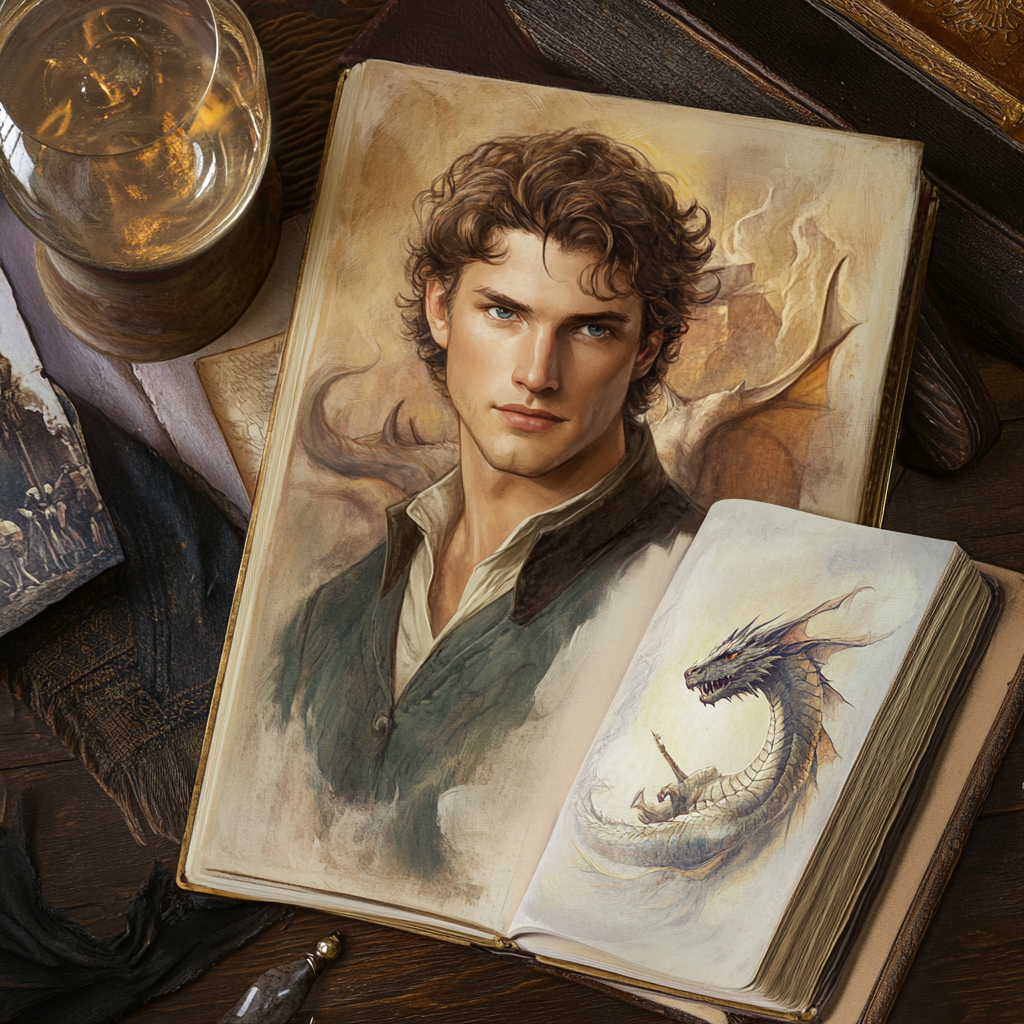
How to Lose a Kingdom Without Really Trying

Once a queen. Now an exile. Soon, a reckoning.
Once upon a time (or possibly next Tuesday – time is slippery where elves are concerned), I decided to write a novel about a world where royal power is just another illusion. The kind of illusion that looks very impressive from a distance, like a tapestry, or a particularly expensive hat, but unravels the moment you tug at the wrong thread.
Thus On Wings of Ruin was born – a story where thrones totter, oaths splinter, and dragons remember things that kings would prefer everybody forgot.
Ara wore a crown once. She wears scars now. But in a world where thrones fall and dragons wake up even an exiled queen still has a role to play.
At the centre of this inevitable catastrophe is Storey, who can travel through time, but he’s the sort of hero who stumbles into history sideways, a little too brave, a little too exhausted, and a little too good at asking the questions that nobody wants answered.
Worldbuilding for this novel was a matter of listening carefully to the silences between kingdoms. I didn’t start with a map or a grand manifesto. I started with a hum – the ancient pull of ley lines, the slow breathing of the earth, and the sense that somewhere deep below all the grand castles and glorious wars, a forgotten agreement was still holding the bones of the world together. (For now.)
One thing fantasy has taught me: kings, queens, empires they all think they’re solid. They speak of destiny and divine right as if those things can’t be stolen, misplaced, or quietly eaten by dragons. And the world of On Wings of Ruin knows this better than most. Here, authority isn’t a sword or a crown. It’s a story – and like all stories, it changes depending on who dares to tell it.
Which is a slightly ominous way of saying that if you enjoy tales where crowns slip, where dragons choose loyalty over politics, and where one weary time-traveller holds history in his shaking hands , well, you might find yourself at home among these ruins.
And if you don’t –
well, no kingdom lasts forever.
Becoming The Story
Persona-Based Branding for Fiction Authors
In an age where authors must be visible to be read, it’s no longer enough to let the work speak for itself. Readers want connection – not just to the characters you create but to the person who created them. That’s where persona-based branding steps in. It’s not about inventing a fake personality or ‘playing influencer.’ It’s about curating a version of yourself that resonates with your work and invites readers into your world.
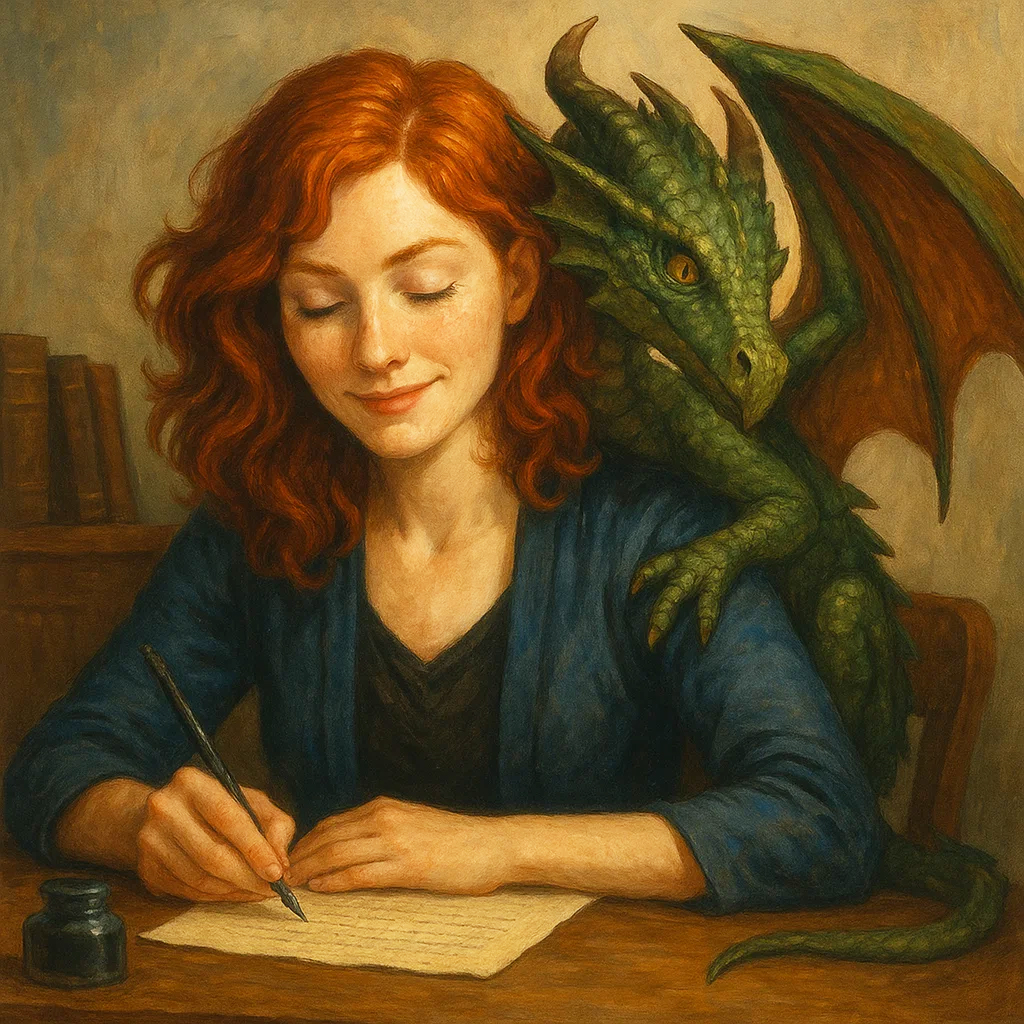
Think of persona-based branding as storytelling applied to the self. It’s the voice you use online, the themes you return to, the way your presence feels to your audience. Are you the mysterious chronicler of forgotten realms? The wise-but-weary scholar of magical truths? The witty, slightly chaotic creative wrestling with plot and coffee stains? Whatever feels true – or creatively true – is the foundation for your persona.
It helps to anchor your brand in the emotional tone of your fiction. If your stories are dark and poetic, your branding can reflect that – moody visuals, lyrical posts, themes of shadow and wonder. If your work is whimsical or historical, perhaps your persona leans toward charm, eccentricity, or scholarly detail. The trick is to be consistent, but not constrained. Think of it more as an atmosphere than a mask.
Social media, blogs, newsletters – they all become stages for your persona. Readers don’t just want updates; they want to feel like they’re entering a familiar narrative space whenever they hear from you. A good author persona doesn’t push books constantly. It builds a world around them.
Importantly, this isn’t about pretending. It’s more like turning the dial up on the parts of yourself that already align with your creative voice. You can still be private. You can still change. But by stepping into a clear persona – intentionally, creatively – you make it easier for readers to find you, remember you, and feel at home in your fiction.
In the end, persona-based branding isn’t marketing. It’s mythmaking. And what author doesn’t already know how to do that?
The Binding Woods
It is a little-known fact – mainly because everyone who tried to document it was eaten by metaphor – that all forests have opinions.
Most of them are quite vague opinions, admittedly, along the lines of “Sun good, fire bad” or “This squirrel is mine.” But there are some woods that are old enough, twisted enough, and magically questionable enough to have very firm opinions indeed. Chief among these: that trespassers make excellent compost.
The Binding Woods, for example, did not simply dislike visitors. It actively rescheduled them.
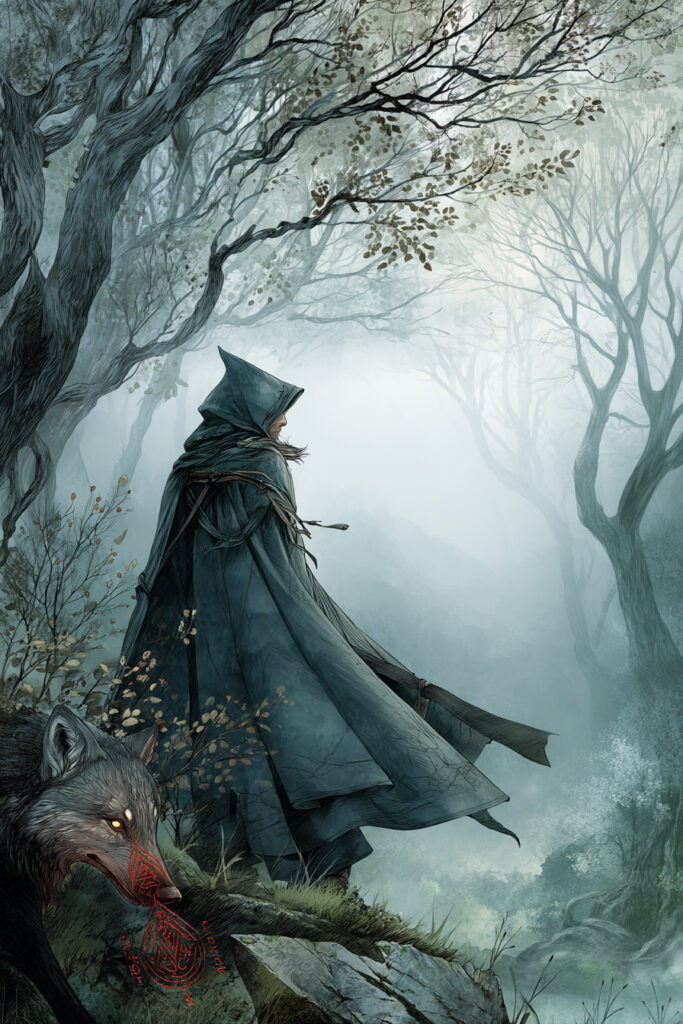
This was unfortunate for Olivir, who wasn’t even there to trespass. He was there on a kind of academic field trip, if academic field trips also came with cloaks that itched in all the wrong places, a talking wolf (possibly hallucinated), and instructions from the Wardens so vague they may as well have been poetry.
“You’ll know it when you see it,” they’d said.
Olivir had seen it. It looked like a tree that had grown backwards through time, or perhaps like several trees that had become too entangled to sort out, rather like the time the Academy’s divination tutor had tried to separate his robes from the tapestry of Fate. Either way, it definitely wasn’t on the map.
But then, maps were for places that wanted to be found.
He peered through the branches. The air shimmered the way heat does off a road – or like reality had been ironed too vigorously and left a crease. The wolf, who had been following him for reasons unknown (and possibly unknowable), gave a noise halfway between a yawn and a dire warning.
“That’s the place,” it said, in a voice like gravel in a sock drawer.
“You’re talking now?” Olivir blinked.
“I’ve always been talking. You’re just finally listening. Typical human – hear one bone riddle and suddenly you’re attuned to the spirit realms.”
Olivir rubbed his temples. “Right. Good. Excellent. Just what I needed. A sarcastic cryptid as a spiritual guide.”
He looked again at the shimmering forest edge.
“You’re sure I need to go in there?”
The wolf sat back on its haunches. “Look, if this were a safe story, there’d be a gate and a friendly sign. Something tasteful, with maybe a helpful gnome. As it stands, there’s this…” It waved a paw vaguely toward the swirling magical nonsense. “…and the distinct possibility of transformative trauma. So yes, go in.”
Olivir sighed. Somewhere behind him, a branch creaked ominously, as if the forest were checking its cutlery.
“Well,” he muttered, “if I die, I hope I at least get an ironic footnote.”
And with that, he stepped through the crease in the world, cloak snagging on a twig that definitely hadn’t been there a moment ago and absolutely had opinions about his fashion choices.
Diamond Dreaming
Every Diamond Tells a Story – by Lily Milner
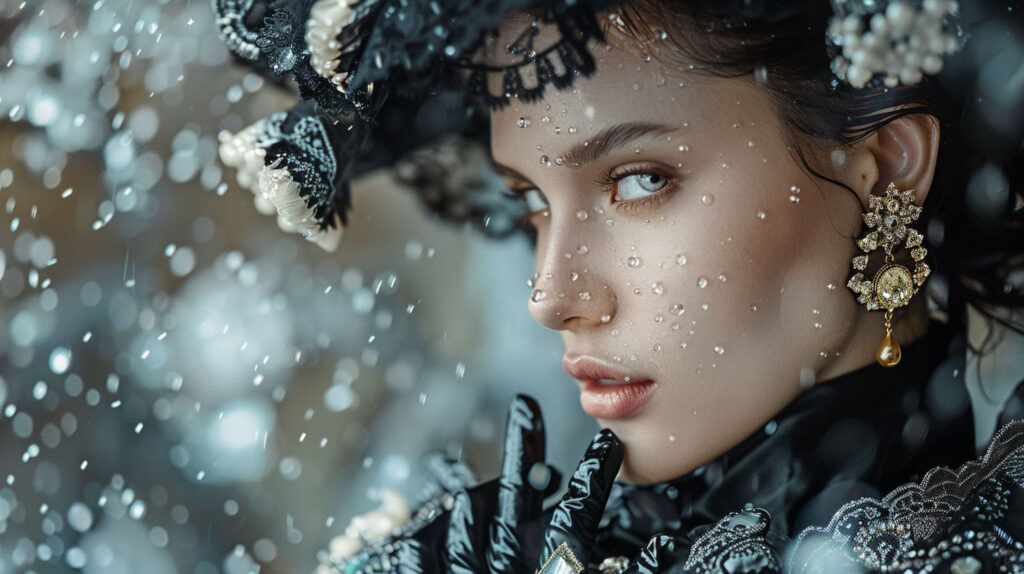
I love stories about diamonds, and that’s probably why I’ve written two novels based on diamond mysteries. Although The Tallisbrook Emeralds is not specifically about diamonds, it was prompted by one of my favourite books by Anthony Trollop, The Eustace Diamonds. In that story, a woman is fighting for an inheritance of diamonds that her dead husband’s family is trying to take away from her. It’s quite a hilarious situation in many ways, with the resourceful widow pretending they were stolen, while she herself is the actual thief.
My book, The Tallisbrook Emeralds, explores the opposite situation, where the woman who inherits the jewels decides she’s not entitled to them, but giving them back will lead to all sorts of complications.
I wrote The Devil Diamond after reading two books about the fabulous Kohi Noor diamond that once belonged to the people of the Punjab, but somehow found its way into Queen Victoria’s crown jewels. My story is what’s currently known as a Romantasy, and my diamond has no relation to the Kohi Noor, but great stories stay with us and often become seeds of something else. Now The Devil Diamond has led me to the follow up, A Perfect Witchcraft, and so it goes on.
The True Story of the Kohi-Noor Diamond–And Why the British Won’t Give it Back.
Unicorns
The Enduring Magic of Unicorns
Few mythical creatures have captured the human imagination quite like the unicorn. With its iconic spiral horn, flowing mane and tail, and aura of purity and grace, the unicorn has symbolized so much across cultures and eras.
At its core, the unicorn represents the innocence, beauty and magic we all hope still exists in this world.
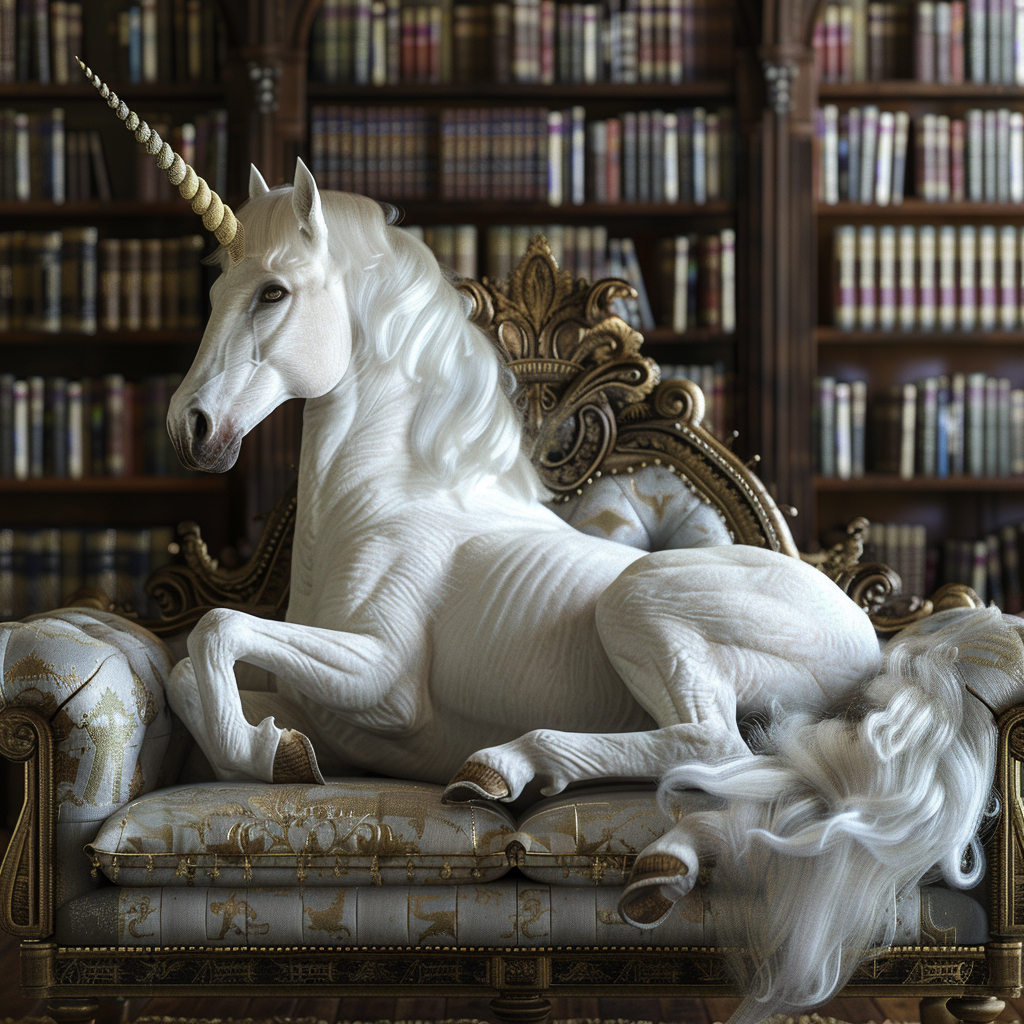
In medieval lore, only a virgin could capture a unicorn, tying the creature to chastity, virtue and purity of spirit. Some cultures associate unicorns with the healing powers of their horns or the life-giving forces of nature. Their depiction often intertwines with religious symbolism, heavenly beings, and the sublime.
Yet unicorns’ deep magic also stems from their paradoxical duality – embodying both the gentle and fierce, the wild and tame, the earthly and otherworldly. This enigmatic quality allows them to symbolize diverse, even contradictory ideas across myths and dreamscapes.
In our modern pop culture, unicorns retain their sense of whimsy, uniqueness and inner sparkle that speaks to both kids and adults. We surround them with rainbows and glitter, while also giving them edgy, ironic cool. Whether representing rare beauty or rooted individuality, the unicorn persists as an eternally beguiling icon of our wonderous imagination.
I created this one with a basic prompt in Midjourney. Here it is: <gorgeous white unicorn, luxurious coat, sitting on an antique couch. turning to camera, in an ancient library with many books. Photorealism –>
I encourage you to experiment. We all need more unicorns in our life.